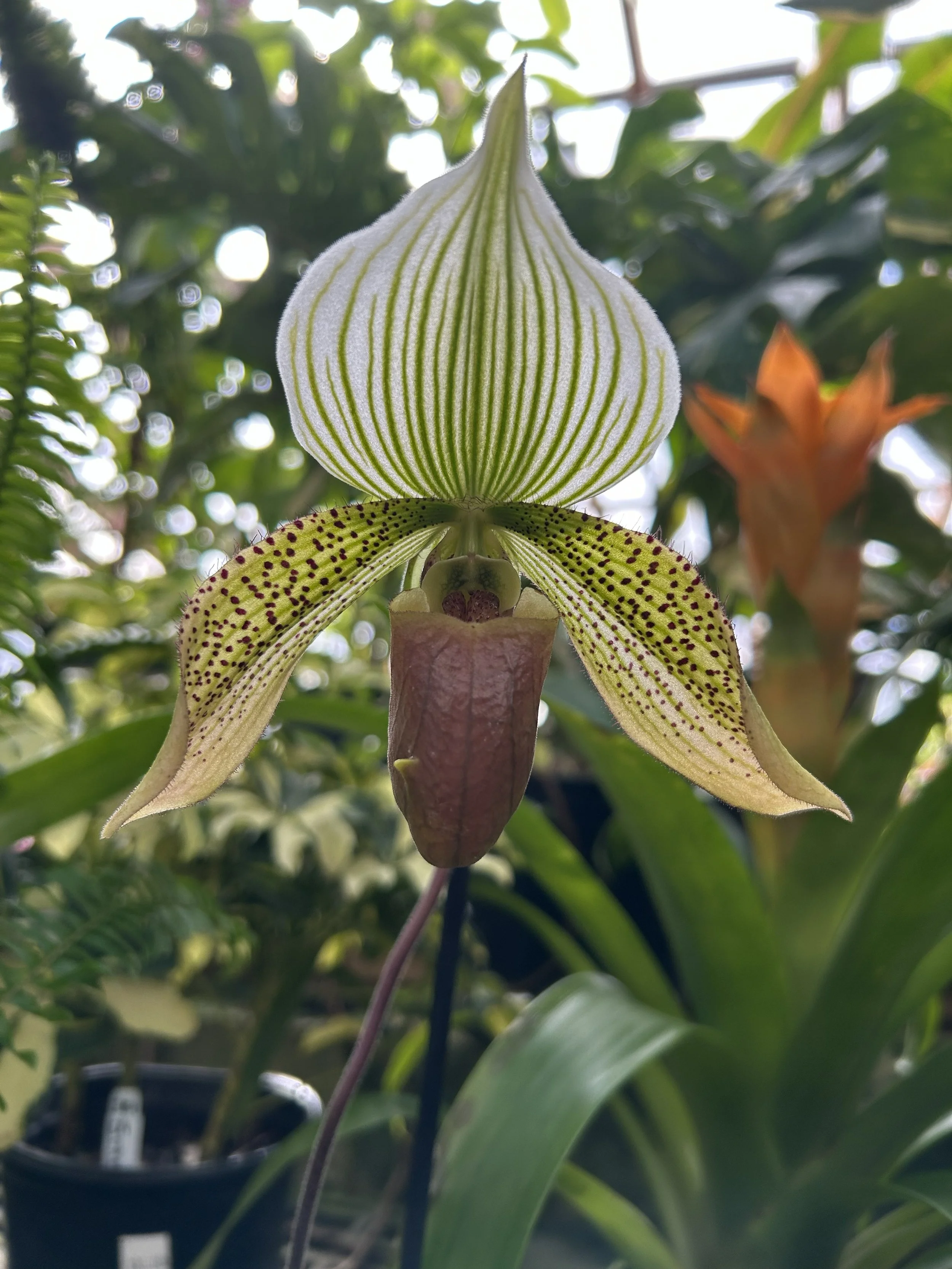
Slipper orchids mimic pheromone scents that attract insects into their pouch
When most people think of mimicry, they think of animals. Chameleons change color, praying mantises resemble leaves, and butterflies imitate toxic species to avoid predators.
Plants, however, have developed their own remarkable forms of deception.
Over millions of years, certain plants evolved to resemble rocks, dead leaves, fungi, insects, and even other plants. These adaptations help them survive in challenging environments, avoid herbivores, or attract pollinators.
Why Do Plants Use Mimicry?
Plant mimicry generally serves one of three purposes:
Protection from herbivores
Attraction of pollinators
Attraction of prey
Some species blend into their surroundings to avoid being eaten, while others deceive insects into transporting their pollen or becoming prey themselves.
Defensive Mimicry: Hiding in Plain Sight
Defensive mimicry helps plants avoid being eaten by blending into their surroundings. In harsh environments where resources are limited, replacing lost tissue can be costly. As a result, many plants evolved camouflage that makes them difficult for herbivores to detect.
Living Stones: Masters of Camouflage
Among the most famous defensive mimicry plants are the living stones (Lithops).
Native to the arid regions of southern Africa, Lithops have evolved to resemble the pebbles and gravel of their surroundings. Their stone-like appearance helps them avoid detection by animals searching for moisture-rich plants.
Other succulents employ similar strategies, including Conophytum, Pleiospilos, and Anacampseros rufescens, whose reddish leaves often blend into rocky soils or resemble dry plant debris.
This form of camouflage is known as crypsis, a strategy that reduces the likelihood of detection by herbivores. Rather than defending themselves with thorns or toxins, these plants simply avoid being noticed.
Reproductive Mimicry: Deceiving Pollinators
While some plants use mimicry to avoid animals, others use it to attract them.
Many flowering plants produce nectar as a reward for pollinators. However, some species have evolved a more energy-efficient strategy: deception.
Orchids That Trick Insects
Some orchids have taken mimicry to extraordinary levels.
Species within the genus Ophrys—commonly known as bee orchids—produce flowers that resemble female bees or wasps. The flowers imitate not only the shape and coloration of the bees, but also their scent.
Male insects attempt to mate with the flower in a process known as pseudocopulation. During this interaction, pollen becomes attached to the insect and is transferred to the next flower.
The orchid receives pollination without producing a nectar reward.
Another type of orchid, Cypripedioideae—also known as slipper orchids—mimic the scent and physical characteristics of gnat and aphid colonies, luring insects like gnats and hoverflies into the one-way slipper pouch. In order to exit the pouch, the insect must crawl past the reproductive organs, picking up pollen as it goes.
Sexual deception vs. food deception
Both the slipper orchid and bee orchid are incredibly specialized with the scents they produce. They both produce complex hydrocarbon compounds that mimic insect pheromones. Each individual species of orchid emits a slightly different, fine-tuned chemical blend that attracts specific pollinator species. Certain orchids can even follow a type of circadian clock, turning on and shutting off this scent at certain times, to match the exact schedule of their specific insect pollinators.
While bee orchids primarily use sexual deception—producing volatile compounds that mimic the sex pheromones of specific bees or wasps—slipper orchids typically rely on food deception. Instead of offering nectar, they emit scent cues that resemble those associated with food sources, luring insects into the flower where they become temporarily trapped and facilitate pollination.
Flowers That Smell Like Death
Not all pollinators are attracted to sweet fragrances.
Plants such as Stapelia, Huernia, and the infamous corpse flower mimic decaying flesh. Their flowers often feature deep red coloration, wrinkled textures, and odors that resemble rotting meat.
To a fly, these flowers appear to be an ideal place to feed or lay eggs.
While investigating, the insect inadvertently pollinates the flower.
Fungal Imposters
A fungal mimic is a plant that has evolved characteristics that resemble a fungus in order to deceive another organism. This deception typically benefits the plant.
Some orchids mimic mushrooms. Species in the genus Dracula produce flowers that resemble fungal fruiting bodies and may even emit mushroom-like scents. These adaptations attract fungus gnats, which normally seek out fungi within the forest understory.
The orchid exploits the gnat's natural behavior to achieve pollination.
However, not every mushroom-looking plant is actually engaging in mimicry. Some simply evolved a fungus-like lifestyle and appearance due to their ecology—basically, their relationship with their environment.
Species such as Monotropa and many members of the genus Thismia spend much of their lives associated with fungal networks beneath the soil. These plants have little or no chlorophyll and do not rely on photosynthesis in the same way most plants do.
Their pale coloration, unusual growth habits, and emergence from the forest floor can make them appear mushroom-like. However, there is currently little evidence that these traits evolved to deceive other organisms. Instead, their appearance is likely a consequence of their specialized lifestyle.
Predatory Mimicry: Luring Prey
Perhaps the most dramatic form of plant deception is found among carnivorous plants.
These species often grow in nutrient-poor habitats where essential elements such as nitrogen and phosphorus are scarce. To compensate, they supplement their diet with insects and other small organisms.
Through the use of bright coloration, nectar, scent, and flower-like structures, these plants attract insects seeking food or pollination opportunities. Once an insect enters the trap, it may become captured and digested by specialized enzymes, providing the plant with extra nutrients.
The Curious Case of the Chameleon Vine
One of the most mysterious examples of plant mimicry—one that may not fit neatly into any of these three categories—is Boquila trifoliolata, a climbing vine native to South America.
Researchers observed that the vine can alter the size, shape, color, and appearance of its leaves to resemble the plants it grows amongst. In some cases, a single vine may produce different leaf forms while climbing multiple hosts.
Scientists believe this mimicry may help reduce its chances of being eaten, by making the vine blend into its surroundings.
Exactly how the plant accomplishes this remains uncertain and continues to be an active area of research.
More Than meets the eye
Mimicry demonstrates that plants are often far more dynamic than they appear.
Whether masquerading as stones, imitating insects, or disappearing into a forest canopy, plants have evolved remarkable strategies for survival and reproduction.
While we often think of plants as passive organisms, mimicry reveals a different story. In many cases, a plant's greatest advantage is not its ability to grow, but its ability to convince the world that it is something else entirely.
Read more about mimicry in plants and animals in Encyclopedia Britannica
