Care Tips
Light, Soil, Humidity, Water, Temperature
Mimicry Plants
SPLIT STONES, TIGER’S JAW, BABY TOES, ICE PLANT, TITANOPSIS, ANACAMPSEROS, CONOPHYTUM
‘Mimicry’ refers to a plant’s ability to present in ways that are deceiving. These plants mimic characteristics of other plants, animals, insects, as well as objects in their surrounding environment like rocks, debris, fungus, or even animal feces. The two main purposes are for camouflage and for pollination. More on this coming to the Blog soon.
There are thousands of species of mimicry plants, many of them being succulents. Lithops—also listed in this Care Guide—are an example. Pleiospilos (split stones) and other mimicry succulents are often confused with Lithops (living rocks), but their care differs in big ways.
-
65-90°F
-
Very low
In the wild, they mostly subside off of morning fog. -
Bright, in a window or under grow lights
-
Every 6 weeks, give or take.
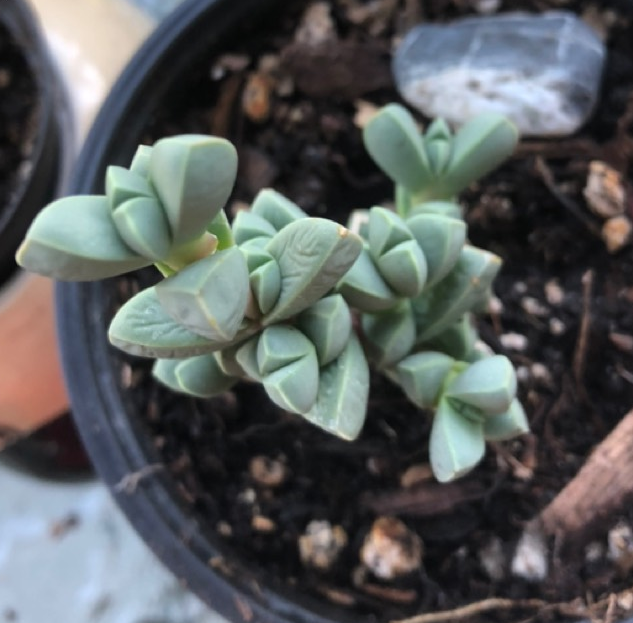
They will tell you by wrinkling, like the ice plant pictured above
-
Gritty, well-draining, some water retention
Recommendations: Cactus mix with some chicken grit or pumice is ideal. In NM, a little superfine bark doesn’t hurt to retain moisture -
Don’t help these plants with their splitting or growing process by picking at them
Little fuzzy hairs, like on Anacampseros rufescens, are part of the plant anatomy
Their leaves store moisture, some more than others; each variety is unique. It’s best to keep them all in their own separate pots. They don’t do well planted with Lithops or cacti, but there are some creative work-arounds. More on this coming to the Blog soon.