Care Tips
Light, Soil, Humidity, Water, Temperature
orchid
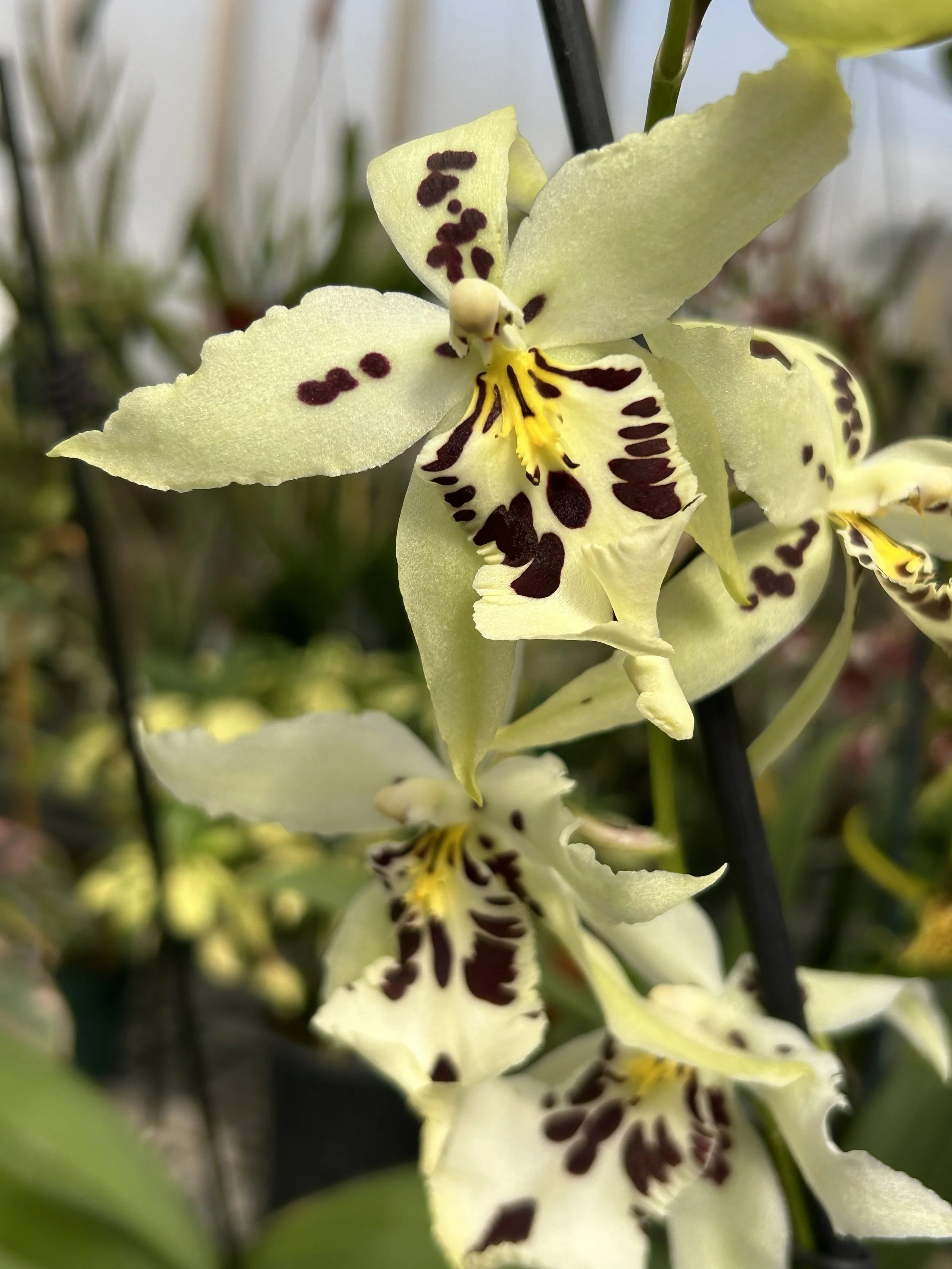
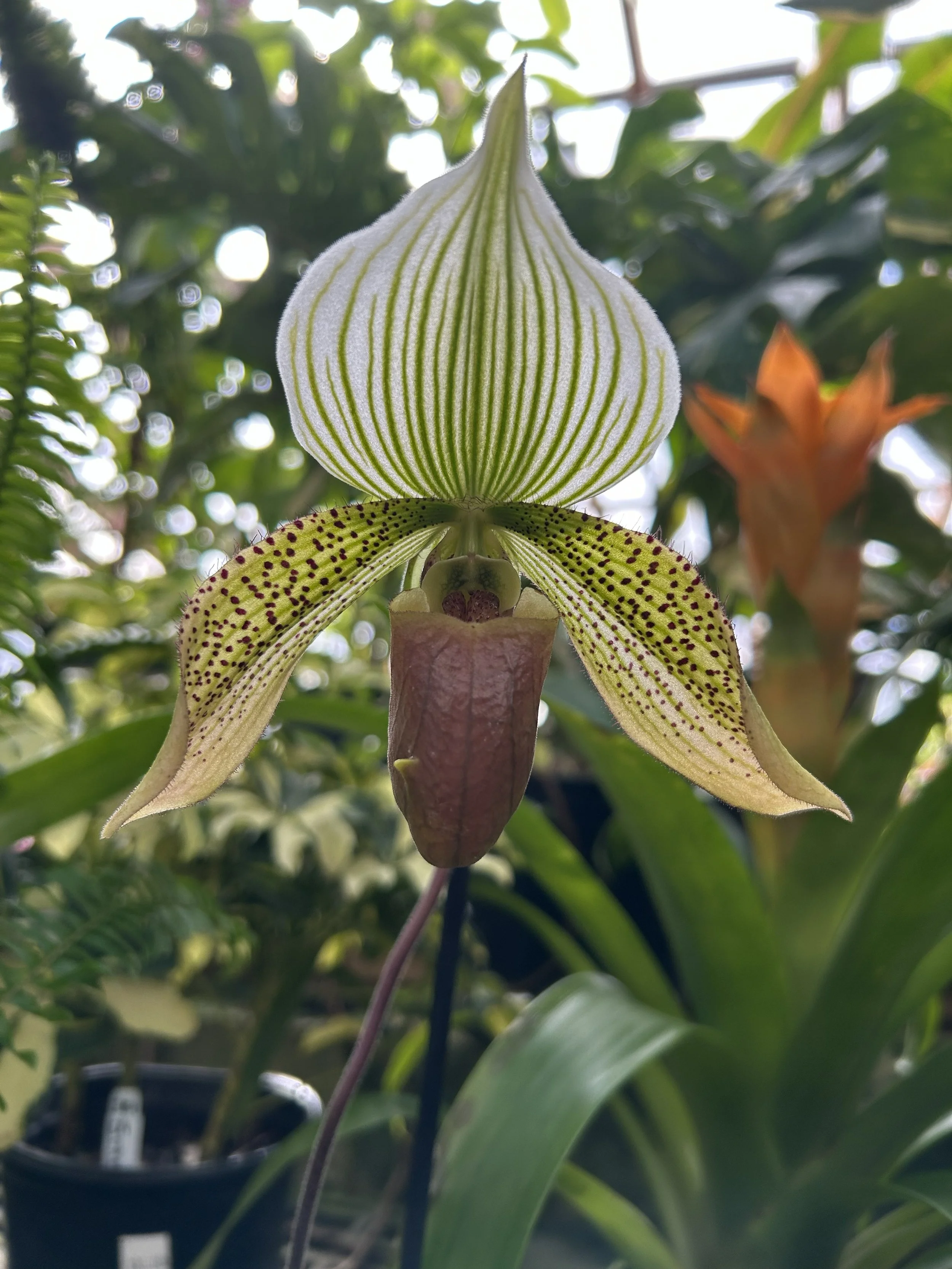
PHALAENOPSIS, CETTLEYA, DENDROBIUM, VANDA, VENUS, MILTONIA, ZYGOPETALUM, ONCIDIUM, CYMBIDIUM
Each orchid type is unique, but a good way to classify their care for a beginner is between three things:
1) Whether they store water for later
2) The type of leaves they have
2) The type of roots they have
Pseudobulbs -
If it has a large green bulb above the potting medium, or if the stalks are thick, like with a Dendrobium, it stores water.
Leaves -
Thick green leaves like less moisture and moderate sun.
Thin green like more moisture and more sun.
Mottled (spotted) like more moisture and less sun.
Roots -
Thick green/silvery - pull moisture from the air and require chunkier mixes.
Thin - pull moisture from the soil, and needs a finer soil with good airflow
-
60-70°F
(wiggle room available for specific varieties) -
50-70%
(wiggle room available for specific varieties) -
Thick green leaves - Moderate
Thin green leaves - Moderate to high
Mottled leaves - Low to Moderate
-
No pseudobulb - consistently moist soil (like a wrung-out sponge)
Pseudobulb - can dry out a little, but substrate should always be a little damp
-
Thick roots - Chunky and airy
Bark, charcoal, sphagnum mossThin roots - Chunky, airy with extra water retention
Bark, charcoal, coarse fern fiber, sphagnum moss -
Don’t be intimidated. Start small, with a Phalaenopsis, then work your way up to other varieties.
The flowers grow in cycles. Most orchids only bloom 1-2x per year. Sometimes not at all.
In New Mexico, orchids need more water and better water retention in the potting mix.
Avoid getting water between the leaves
More info coming to the Blog page soon, including ways to troubleshoot issues.