Care Tips
Light, Soil, Humidity, Water, Temperature
succulent
ECHEVERIA, SEMPERVIVUM, PACHYPHYTUM, GRAPOPETALUM, SEDUM, CRASSULA, AEONIUM, ALOE, AGAVE, HAWORTHIA, YUCCA
There are so many different varieties of succulent, falling into roughly 3 categories: rosette, trailing, and columnar.
There are also desert succulents and tropical succulents.
ROSETTE
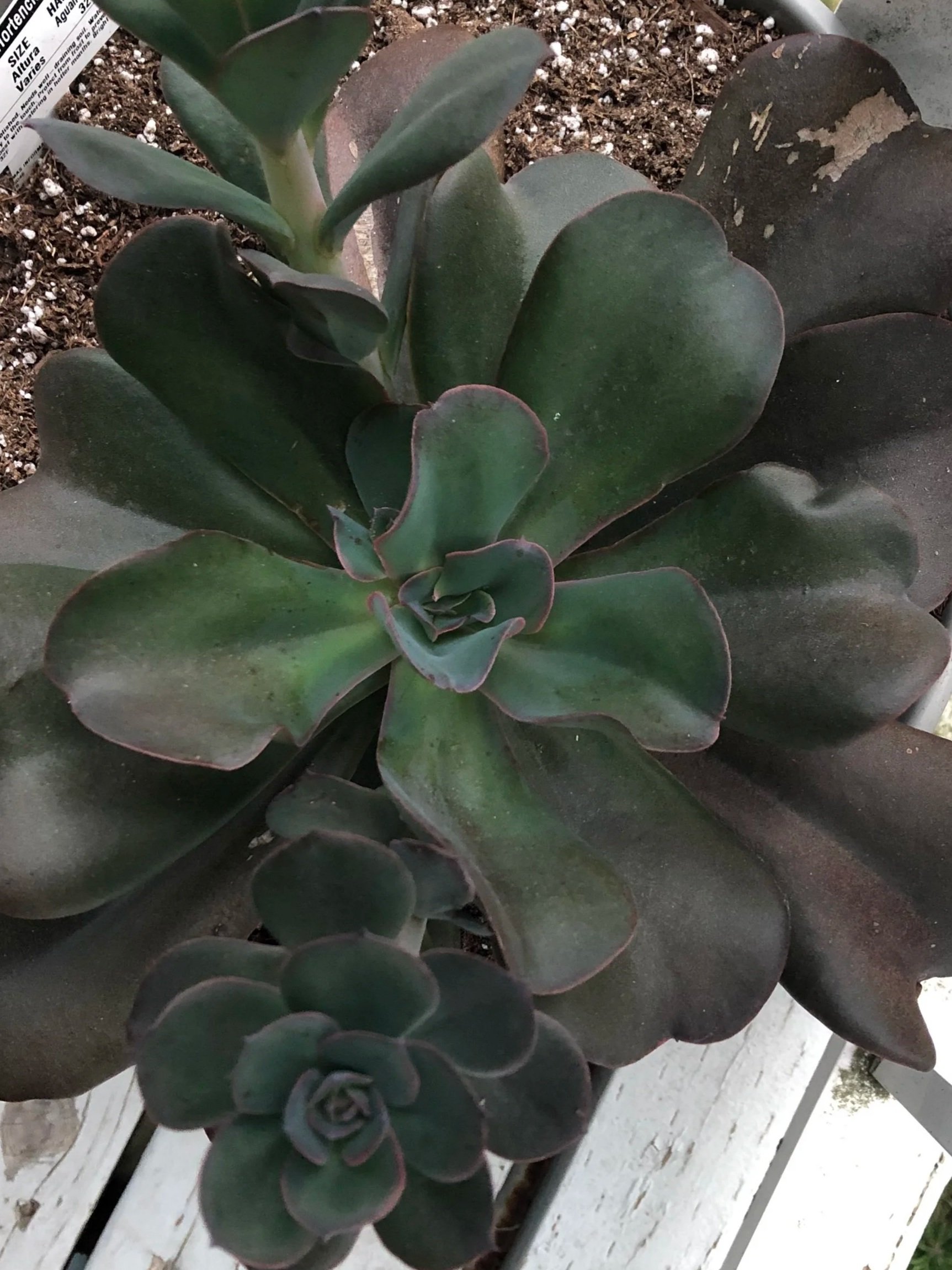
These succulents look like flowers, like Echeveria and Sempervivum. They’re wide and compact. These require a lot of sun; although, in New Mexico, some varieties can burn if outside for too long. South windows are fine, but sometimes still not enough. Grow lights are ideal because they provide bright, overhead light without being too harsh. Most succulents should dry out completely between waterings.
TRAILING
These varieties have soft stems and are great for hanging baskets, like String of Pearls or Burro’s Tail. They require bright overhead light and bottom watering. They will waterlog and shrivel if water is left to sit on top of the soil. Soil needs to be slightly more moisture retentive.
COLUMNAR
These are tall, upright-growing, like Aloe and Jade Plants. Generally more drought-tolerant.
TROPICAL SUCCULENTS
Some succulents grow in tropical areas of the world, with characteristics from all categories listed above. They are much less tolerant of cold temperatures. A common tropical succulent is the Jade Plant.
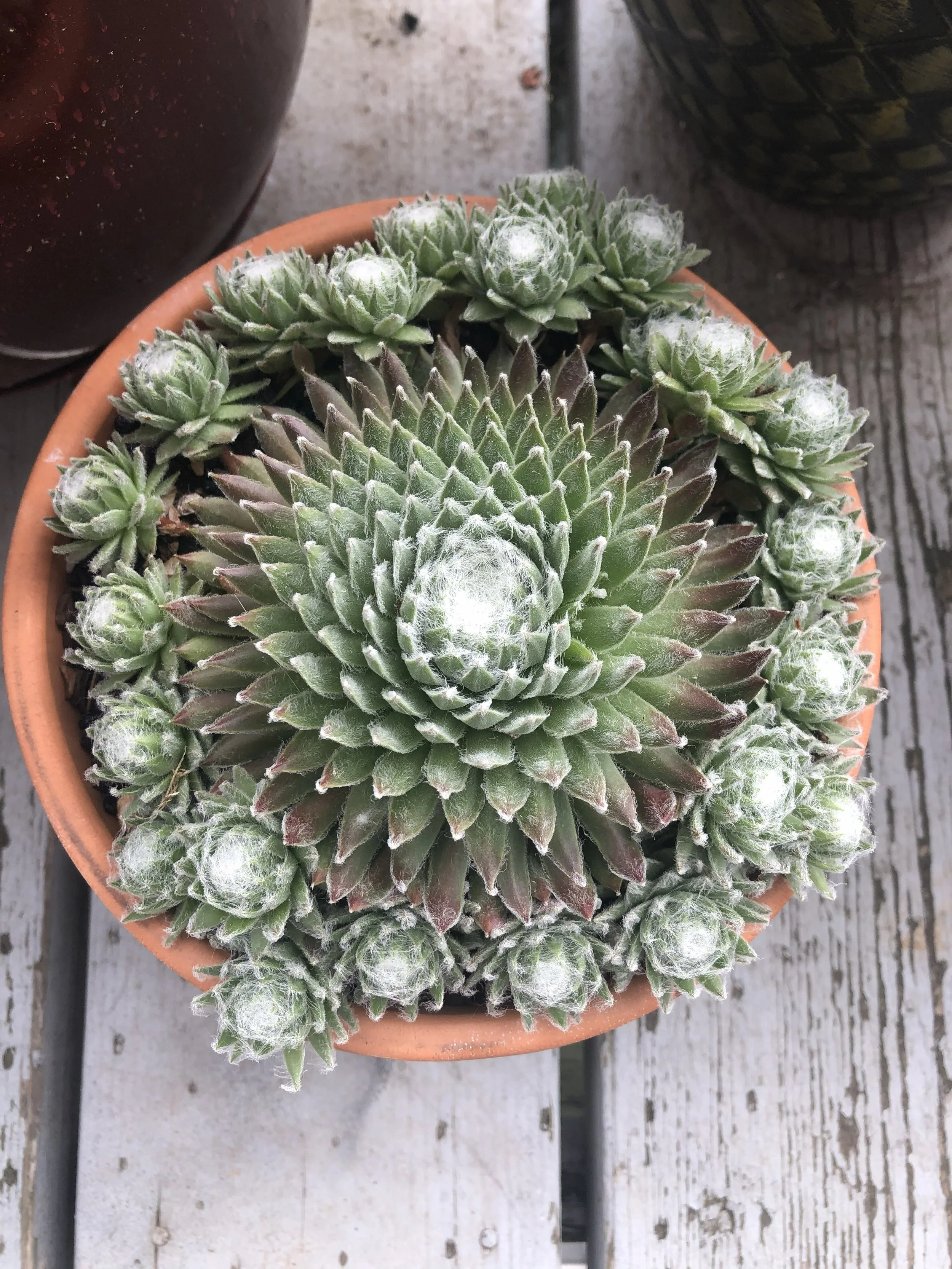
To protect themselves from high and low temperatures, many succulents have defense mechanisms like waxy/powdery coatings (farina), hairs (like the cobweb sempervivum pictured), and spines. They also perform gas exchange overnight, which makes them more heat tolerant during the day. A house-succulent, however, cannot go from inside to outside in the direct sun—gradual acclimation is necessary.
-
65-90°F+
-
Low
-
Bright, indirect for most varieties
Bright, direct for Sempervivum, Sedum, Yucca, Agave, and Cactus.
Most succulents can’t survive in direct light for the whole day. They need intervals of shade
-
Water when completely dry, every 4-6wks.
If leaves are soft or wrinkled, it’s time to water.
-
Gritty, fast-draining
More moisture-retentive for trailing varietiesRecommendations: Pumice, lava rock, bark, charcoal, zeolite, chicken grit, Black Gold Cactus Mix
-
In New Mexico, terracotta isn’t always better. Plastic or ceramic pots work well because they don’t dry out too fast.
Always use drainage holes
Most succulents have shallow roots and like to be snug, so smaller pots are ideal
Haworthia, Agave, and Aloe tend to have robust root systems, so they need deeper pots.
Many succulents have defense mecRotate plant pots for even growth; succulents reach toward the sun